
You Don't Get This On MSDN
1,535
0
Advertisement
What do you get when you combine C#, C++/CLI, Access 2003, VirtualBox, a few ISOs and too much free time?
You get a 345MB database of the complete API and dependency history of 32-bit Windows. Yep, every OS module from Win95 onwards has had its imports, exports, and selected PE header info extracted and committed to a handy-dandy Access 2000 format database. That's a chronicle of 41 OS versions, 47,000+ modules, over 2,100,000 exports and over 5,125,000 imports. It also contains a bunch of premade SQL queries for statistical usage and some useful ones too such as "Which modules import a specific function?" and "What are the differences between dll version x and y?"
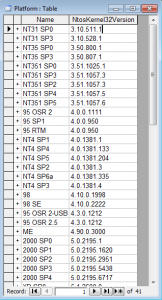
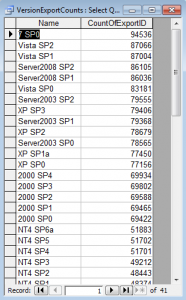
An idea of what data is available:
Platforms
OS Export counts
Modules which import a specific function on a specific OS, here its SHUnicodeToAnsi on Vista SP0

You can download the 35MB 7-zip archive as well as lark around with other statisical data on the registry and resources from that cheekily embedded link. Happy querying.
You get a 345MB database of the complete API and dependency history of 32-bit Windows. Yep, every OS module from Win95 onwards has had its imports, exports, and selected PE header info extracted and committed to a handy-dandy Access 2000 format database. That's a chronicle of 41 OS versions, 47,000+ modules, over 2,100,000 exports and over 5,125,000 imports. It also contains a bunch of premade SQL queries for statistical usage and some useful ones too such as "Which modules import a specific function?" and "What are the differences between dll version x and y?"
An idea of what data is available:
Platforms

OS Export counts

Modules which import a specific function on a specific OS, here its SHUnicodeToAnsi on Vista SP0

You can download the 35MB 7-zip archive as well as lark around with other statisical data on the registry and resources from that cheekily embedded link. Happy querying.
Advertisement
Advertisement
Advertisement
Discussion