
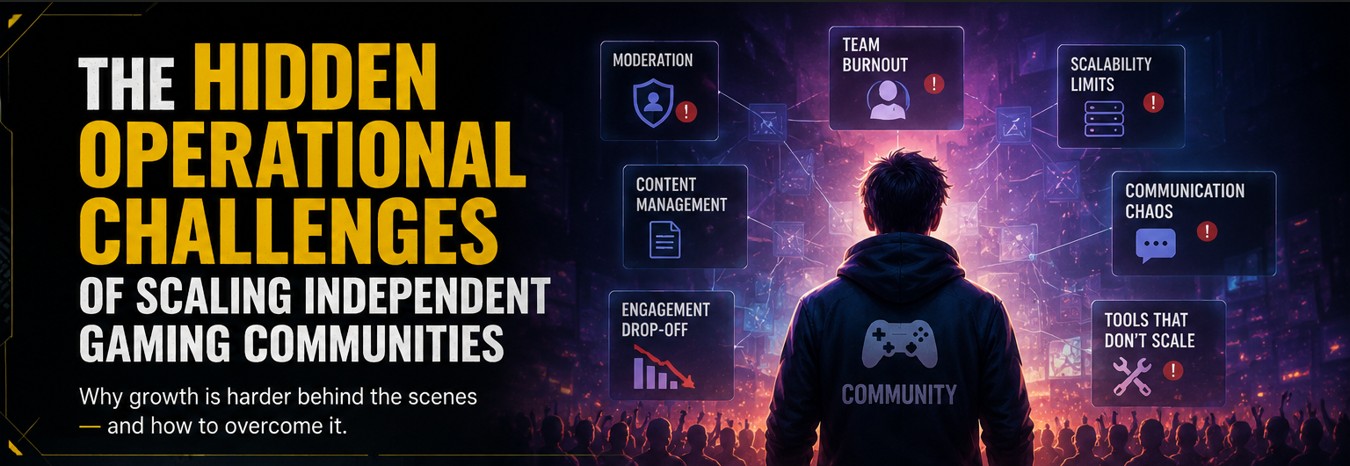
The Hidden Operational Challenges of Scaling Independent Gaming Communities

The landscape of multiplayer gaming is undergoing a massive shift. While AAA studios pour hundreds of millions of dollars into live-service titles, players are increasingly seeking out tighter, more dedicated spaces. From retro revival servers to custom matchmaking platforms, independent gaming communities are booming.
However, moving from a small passion project with a few dozen friends to a scaled, independent platform comes with a unique set of hurdles. When you don't have a publisher's bank account or a massive enterprise dev team behind you, how do you scale without breaking?
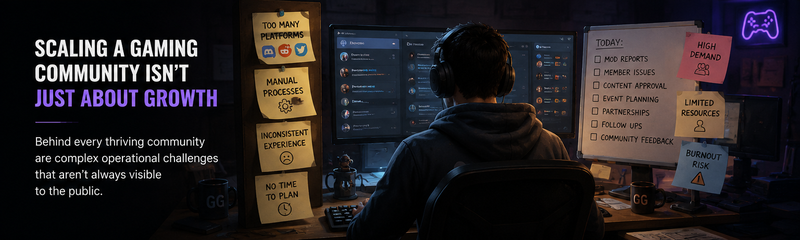
Here is a look at the hidden operational challenges of scaling independent gaming communities, and how to navigate them.
The Infrastructure Balancing Act
For an indie platform, infrastructure is a double-edged sword. If you under-provision your servers, a sudden influx of players leads to game-breaking latency, bad matchmaking times, and instant player churn. If you over-provision, your monthly server bills will swallow your project whole before it can even monetize.Unlike official corporate servers that can rely on massive cloud credits, independent platforms must master elastic resource allocation. You need to know your peak hours perfectly usually weekends and evenings, and utilize lightweight, highly optimized backend structures that can scale down during quiet weekday mornings to save costs.
Managing the "Feature Creep" of Player Feedback
When players find a community hub they love, they become incredibly vocal. They want custom stat tracking, unique cosmetics, modified game rules, and specialized forums.
For community managers, filtering this feedback is an operational nightmare. If you try to build everything your players ask for, your core experience becomes bloated and unstable. Successful scaling requires a strict adherence to a core roadmap. You must learn to separate "noise" from actual value-driven features that improve retention.
Real-World Case Study: Optimizing the Player Hub
To understand what this looks like in practice, look at how custom hubs manage specific fan bases. Managing infrastructure and player traffic spikes requires a lean approach to server optimization.
For example, over at platforms like Magic Brawl, maintaining an alternative community hub and private environment for Brawl Stars fans meant solving unique database bottlenecks. When a popular mobile game updates, thousands of players rush to community hubs simultaneously. Ensuring that the matchmaking remains seamless and the server loads stay steady during those high-traffic windows is what separates a successful hub from one that crashes and loses its audience. When you give the community a stable, lag-free environment, player retention naturally follows.
The Burnout of Decentralized Moderation
You can have the best server architecture in the world, but if your community is toxic, players will leave. At scale, moderation becomes a full-time operational task.
Most indie hubs rely on volunteer moderators. The challenge here is consistency. Without proper community guidelines, automated filtering tools, and clear escalation paths, your volunteers will burn out rapidly. Scaling a community means automating the baseline moderation (filtering slurs, blocking spam bots) so your human moderators can focus on resolving nuanced player disputes and keeping the environment welcoming.
Community First, Scaling Second
Scaling an independent gaming platform isn't just a technical challenge; it’s an operational one. By focusing on lean server infrastructure, prioritizing core features, and protecting your moderation team, you can build a platform that survives the volatile gaming landscape.
What about you? Have you ever helped moderate or manage an independent server community or matchmaking hub? What was the biggest bottleneck you ran into when player numbers started to climb? Let's discuss in the comments below!
Discussion