
So, You Have Cool Game Ideas?
The reality of trying to sell your game idea to a developer.
[hr]
To be honest, it's very VERY difficult for someone outside a game company to get their ideas past said company's front door.
For that matter, it's not all that easy to get a game company to look at your ideas if you work for them! There are a number of reasons for this:
- The "Legal Reasons" that everyone speaks of revolve around legal possession of an idea. Let's say that a company had a similar idea a year ago and they've spent a million dollars or more developing that idea up until this point. The company says, "Sure, I'd love to hear your new, innovative game idea." It turns out the idea is the same as the one the company has been working on for the past year and, when the game comes out, you have a "he said/she said" lawsuit on your hands over whose idea the game was in the first place. That is a hassle that no company wants.
[nbsp]
- A lot of people don't understand the fundamentals of the games development business. They don't understand technology limitations, development times, financial concerns or any of the other headaches of developing a new product. Their idea proposals say things like, "You would recreate New York City to scale and have 4 million unique looking and sounding individuals that you can interact with and you can have 500,000 of them on the screen at the same time when you join them in Times Square for the New Year's Eve ball drop. That's when the aliens attack and severely damage the city, so all of the buildings have to be half-destroyed as the city is plunged into chaos and eternal night. Then you and your band of 10,000 resistance fighters lead the charge with 50 different weapons and squad based tactics and the game would toggle between first person, third person, top down and map views" and on and on and on and on and on... You see what I mean? A vast majority of game idea submissions suffer from this problem. I call it "Newbie Ambition." Game Development is mostly about figuring out "what cool stuff you can do in a limited time period with limited cash."
[nbsp]
- Another reason for not accepting game ideas is a question of who takes the risk? The game company is spending 2-3 million dollars on the development cycle for the game and, in turn, they are taking all of the risk. Why, then, should they pay someone from outside the company for their game idea when they aren't taking any of the risk? Generally speaking, every game company has more ideas of their own on the back burner than they will ever have time to produce and thus, there's no reason to accept outside ideas.
Think of it this way. Everyone at one time or another has tried to write a novel or has had a "great idea" for a novel. How many book publishers will take an idea for a novel if they have to do the writing or pay someone to do the writing? None. Therefore, the people with the ideas have to write the books. How many of them start writing? How many of them actually FINISH the novel? When they're finished, how many get published at all? And of those that are published, how many are published without changes made by the publisher? See what I mean?
Think of game companies as established entities in the entertainment business. Generally speaking, game companies think they know everything there is to know about gaming because they've paid their dues and worked their way to the top. Just as you won't sell a Star Wars sequel to George Lucas or a spec ops book to Tom Clancy, odds are you won't sell your big idea to a game developer. Sadly, it's just the nature of the business.
Now, if you DO want to get your idea made into a game, there are a couple of things you can do:- Get a job at a game company. If you're on the inside, your chances of getting your ideas noticed or accepted are much greater because most of the legalities disappear.
[nbsp]
- Get a team together and make the game yourself. If not the whole game, make a solid, working demo. This will show publishers that you're serious and it will give them something concrete to look at. Game development is a very visual business and it's a lot easier to judge a game idea from a demo than from a piece of paper or a wordy verbal description.
It's a great misnomer that game companies (or any companies for that matter) employ "idea people" or think tanks to push the company in bold new directions. Hard work and contribution to a greater goal or the greater good of a company is the only way to get anything done in the business world. That goes for your own company or any company you're working for. Unless, of course, your family owns the company... Then all bets are off on the hard work and contribution part.
Hope this helps!
[hr]
Not (C) 2000, so feel free to reproduce as you see fit.
- Get a job at a game company. If you're on the inside, your chances of getting your ideas noticed or accepted are much greater because most of the legalities disappear.
Related Tutorials

Tutorial on creating snow Post Process with UE
Tutorial on creating snow fog with UE You can get more info here! https://www.youtube.com/channel/UC6FyDBid7cF9Ll3004O…
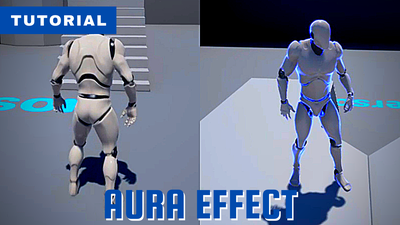
How do you create an aura effect? Look at this!
How do you create an aura effect? Look at this! We are constantly making Unreal Engine tutorials. I hope it will be he…
A/B Testing HTML5 Games
This is a brief tutorial demonstrating how to use Google Optimize's server-side a/b testing technology to learn how to …
How to Prepare a Game for Localization? Basic Rules
A list of rules for developers to keep in mind in order to get ready for localization. Key internationalization princip…
 Alconost
Game Design User Experience Best Practices // Ultimate Guide
Top best practices and pro-tips for common game mechanics you should implement in your mobile games: The ultimate guide…
 Amir Dori
7 UX Lessons From The Trenches
In showcasing my team's game at a few game events, we learned a few lessons on UI and condensed them into a simple, pra…
 Jason Davey
Discussion
More from Cliff Bleszinski and Kenn Hoekstra
Comparing Shadow Mapping Techniques with Shadow Explorer
New Incentives and a Whole New Platform From The Intel AppUp developer program
The final installment in this series on Intel's AppUp program details additional incentives and opportunities for devel…
The Game Maker
This book excerpt contains the first chapter of the book that introduces beginning game developers to the Game Maker pr…
Discussion