
What Companies Look For
Susan Wooley of Blizzard and Matt Green of Cinematix offer advice about what game developers look for in potential employees.
Susan Wooley from Blizzard answered the following questions:
[size="3"]I was wondering what Blizzard looks for in hiring a game developer?
"By "developer," I will assume you mean a programming position, since we use the term here to denote anyone who works on a title. Game developers must have a passion for coding that exists outside an academic setting. We look for people who have the initiative to learn coding techniques on their own (as well as in school), and who have significant projects they have worked on during their spare time or outside of work. Aside from that, prior experience in the industry or professionally as a programmer is a significant factor.
[size="3"]Which technical/personal skills are the most important?
It is vital to be a real game player. You need to be up on all the current games and, more importantly, why you like or dislike them. The ability to understand and to analyze the strengths and weaknesses of video games is essential. Also, being an excellent team player and communicator helps in the very team-oriented environment at Blizzard. As for technical skills, they vary according to the job at hand. At the core, we look for excellent skills with C and C++ on the Windows platform. Some base knowledge of assembly language is also important for understanding how to create optimized code. Finally, 3D skills are a hot commodity right now and are the hardest to find. If you do learn 3D, don't just use an API like Glide, OpenGL or Direct3D and be done with it. You need to demonstrate that you know how these APIs get the job done at the low level - to have a real understanding of how 3D works. Finally, networking skills for multiplayer games is a skill we look for. Networked games over the Internet have special difficulties and challenges involved with latency, security and other issues. A firm knowledge of how to deal with these issues is a great skill to have when applying to Blizzard.
[size="3"]
What kind of experience do you require?
Work experience on a significant project (doesn't have to be games) is important. However, we have high regard for those who have created significant "hobby" code or actual shareware products while still in school. If you are good at programming, then you will most likely have pursued it as a hobby in addition to a degree or vocation.
[size="3"]Do you have any advice for a near college graduates who are interested in pursuing a career in the gaming industry?
Write code in your spare time, and it doesn't have to be game code. If you write an emulator, or your own programming language, utilities, or applications that demonstrate significant skill, you have a leg up on everyone else. Finally, I'd like to mention that I get many questions on how to get started as a game *designer*. At Blizzard, game design tends to be a team effort, and we don't really have openings for designers as a stand-alone job. The best way to contribute to game design, or to become a designer, is to start as a programmer, artist or musician. Game design is a complicated affair these days, and having an understanding of what it takes to make a game (from a production standpoint) is just as important as knowing what makes a game fun. QA is also often cited as a way to get started, and this is true. Your chances of moving from QA to game design are much greater, however, if you invest in some core skills up front. If you know you have no interest in hard-core programming or art, you can at least know the basics of each, and then apply yourself to level design. There are so many tools for making your own game levels and environments out there now. These tools are a great way to show you know what it takes to design levels and balance a game. Take advantage of their scripting and custom art abilities to further show that you have some familiarity with the production side of gaming as well.
Matt Green from Cinematix offered this advice:
"If you want to enter the industry as a programmer, DirectX/Direct 3D, OpenGL, and Assembly programming are useful in addition to the skills you mentioned, [C, C++, Object-Oriented Programming, Systems analysis and Design]. For a designer position, we look for someone who: plays games til' thier fingers bleed, follows all game industry news, and generally knows as much as possible about video games. You can get some good level design practice using editors of Unreal, Starcraft, AOE, and Quake II. Good communication skills, as well as general knowledge of art, programming and computers are also essential".
Thanks to Susan and Matt for taking the time to help out.
Note: I do not remember where I got this. It has been sitting on my hard drive for a while. If the originator contacts me, credit will be given. -Rhino
Related Tutorials

Tutorial on creating snow Post Process with UE
Tutorial on creating snow fog with UE You can get more info here! https://www.youtube.com/channel/UC6FyDBid7cF9Ll3004O…
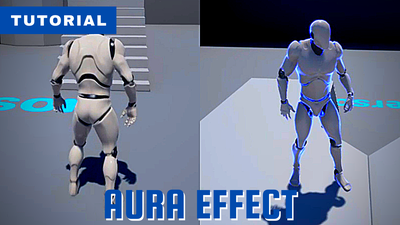
How do you create an aura effect? Look at this!
How do you create an aura effect? Look at this! We are constantly making Unreal Engine tutorials. I hope it will be he…
A/B Testing HTML5 Games
This is a brief tutorial demonstrating how to use Google Optimize's server-side a/b testing technology to learn how to …

How to Prepare a Game for Localization? Basic Rules
A list of rules for developers to keep in mind in order to get ready for localization. Key internationalization princip…
 Alconost

Game Design User Experience Best Practices // Ultimate Guide
Top best practices and pro-tips for common game mechanics you should implement in your mobile games: The ultimate guide…
 Amir Dori

7 UX Lessons From The Trenches
In showcasing my team's game at a few game events, we learned a few lessons on UI and condensed them into a simple, pra…
 Jason Davey
Discussion
More from Susan Wooley and Matt Green
Comparing Shadow Mapping Techniques with Shadow Explorer
New Incentives and a Whole New Platform From The Intel AppUp developer program
The final installment in this series on Intel's AppUp program details additional incentives and opportunities for devel…
The Game Maker
This book excerpt contains the first chapter of the book that introduces beginning game developers to the Game Maker pr…
Discussion