
When Your Best Isn't Good Enough: A Tale of Failure (Part I)
Making a game succeed is tough and unpredictable. No amount of hard work can shield you from failure - and yet we often only hear about the success stories. A two part look at failed Kickstarter campaign for the music sandbox game, Cadence.
 Initially things seemed to be following the script perfectly. Our followers and local community rallied behind us and my phone started going ballistic with notifications. It was awesome to see the outpour of enthusiasm and the show of faith from friends and family was beyond overwhelming! We hit our initial targets with ease and it seems like we were on track for a great campaign. However, 48 hours after I'd landed in San Francisco it was clear that we'd already reached everyone who cared and our campaign hit a brick wall. Whilst alarmed, we weren't deterred - we knew about the infamous Kickstarter trough. So it meant we weren't going to have a fairytale campaign, but that was something we were ready to accept as we settled in for the long slog. And besides, I was about to attend both GDC and SXSW - what better place to promote a flagging Kickstarter? As it turns out GDC and SXSW were both amazing experiences that benefited Cadence immeasurably, but a miserable result for the Cadence Kickstarter itself. My press strategy of hunting down anyone with a press tag and cornering them until they'd heard about Cadence resulted only in coverage we probably could have secured anyway (thanks RPS)! Perhaps it was merely luck, but the press simply wasn't anywhere that I was. Still, I jumped at every possible chance to recruit allies and many developers and personal heroes soon learned about Cadence and in many cases tweeted about the game. This kept a steady trickle of new eyes coming, but still it was never more than a trickle. As it became clear the campaign was flagging, some of our supporters started to speculate as to what we were doing wrong. In particular we received some "heated" criticism for not including a demo. Originally we decided to omit a demo because we've seen examples of this having a negative effect on sales. But we weren't zealots and were willing to experiment. Curiously, our demo release made almost zero difference to the trajectory of our campaign. Perhaps it would have been different if it was there from start, but I have my doubts.
  Many aspects of our campaign got picked apart and analysed, from our reward tiers to the video to feedback that our message was confusing and muddled. I believe that all of these criticisms have merit: certainly we could have done a better job of explaining the game, to explain why it's worth a backer's money, to have compelling rewards that let backers feel like they're getting their money's worth. To craft a message that allows backers to feel like they are part of a movement, and something bigger than themselves. I don't blame people for focusing on these factors, indeed they are the very same things we focused on whilst in research mode. The common denominator all these attributes share is that they happen to be the forward facing elements publicly visible on any Kickstarter page. From this it's easy to assume there is a correlation between getting each of these elements right and Kickstarter success. But now I believe this is a dangerous way of thinking that glosses over the most important fact: it's all about eyeballs.
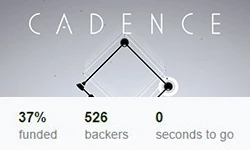
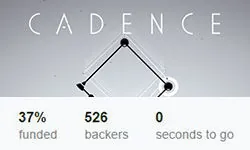
 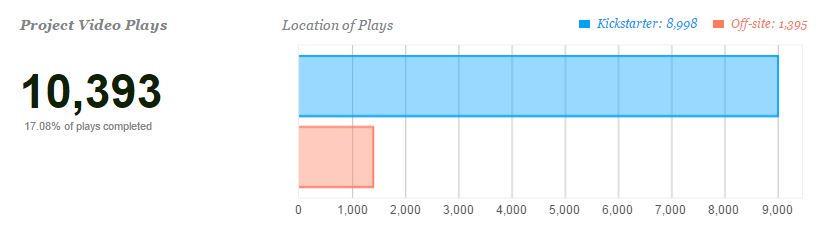 At the end of the day only 10 000 odd people ever clicked play on our video - resulting in 526 backers and 37% percent of our funding goal. I imagine that if that number was closer to 30 000 there is every reason to believe that we would have been funded. Clearly, we're not experts on how we could have changed this equation, but we must admit we dropped the ball by not focusing on one obvious area: youtubers. Considering that a single Let's Play by a medium-sized indie-friendly caster could have delivered those views, focusing our efforts elsewhere was a very costly mistake. Of course youtubers can be quite enigmatic in what they choose to cover, but at the very least we messed up some simple basics like giving two week lead-in time before the start of the campaign. This is one of those instances where I felt like it would've been much better for me to be at home, jockeying a keyboard and sending emails, rather than navigating two conferences 10 000 miles away. In many of my discussions at GDC, I heard other developers mention that Kickstarters often work better the second time round, and I think I can see why. Having a captive audience is perhaps the most valuable asset you can have when selling any kind of game. Building this audience however requires painstaking effort, much like a stalagmite growing one drop at a time. Starting from scratch when you launch a Kickstarter campaign is a very tall order. I think this goes a long way to explain why Kickstarters with nostalgia appeal do so well. Looking back it would be easy to say the campaign was a disaster, but given the number of positive reactions we still believe the game deserves to be made. Of course, the money alarm bells were ringing frantically, so we spent the final days of the campaign throwing together our own tongue-in-cheek "Noodlestarter" page to try and capture Kickstarter momentum. It was refreshing to poke a bit of fun at what is essentially a pre-order page. We never had high expectations, but for a couple of days work, the month or two of funding it secured was well worth it. In Part II I'll retell the story, focusing on the view from my seat in the emotional rollercoaster. In particular this highlights how failure undermines your ability to be effective, and looks forward to our launch on Steam Early Access and beyond.
Related Tutorials

Tutorial on creating snow Post Process with UE
Tutorial on creating snow fog with UE You can get more info here! https://www.youtube.com/channel/UC6FyDBid7cF9Ll3004O…
How do you create an aura effect? Look at this!
How do you create an aura effect? Look at this! We are constantly making Unreal Engine tutorials. I hope it will be he…
A/B Testing HTML5 Games
This is a brief tutorial demonstrating how to use Google Optimize's server-side a/b testing technology to learn how to …
How to Prepare a Game for Localization? Basic Rules
A list of rules for developers to keep in mind in order to get ready for localization. Key internationalization princip…
 Alconost
Game Design User Experience Best Practices // Ultimate Guide
Top best practices and pro-tips for common game mechanics you should implement in your mobile games: The ultimate guide…
 Amir Dori
7 UX Lessons From The Trenches
In showcasing my team's game at a few game events, we learned a few lessons on UI and condensed them into a simple, pra…
 Jason Davey
Discussion
More from Peter Cardwell-Gardner
When Your Best Isn't Good Enough: A Tale of Failure (Part II)
No amount of hard work can shield you from failure - and yet we often only hear about the success stories. A honest and…
My GDC virginity: Of indie loserdom, hope and friendship.
Indie developer Peter Cardwell-Gardner details his experiences of his first GDC. A tale of woe trying to pimp a failing…
Making Games is Hard
A developer shares the story of his experience and difficulties in creating a game that's still not done.
Discussion