

Adopting CI/CD: How Midwinter Entertainment iterates at speed with the help of IMS
Game development was once like one long sprint: a huge effort until you reached the finish line — at which point you could stop. But with Games as a Service, development happens over several years, not least while the game is live.

Game development was once like one long sprint: a huge effort until you reached the finish line — at which point you could stop. But with Games as a Service, development happens over several years, not least while the game is live. As you ship new features on a continual basis, the problems and profile of a project will change. Traditional development frameworks are no longer suitable. Using continuous integration/ continuous delivery (CI/ CD) practices is a superior approach, with fast feedback loops that enable the rapid iteration and agile development that allow studios to respond to players and keep them engaged.
But getting there is not straightforward. Tools and processes exist to solve common problems, but they are only part of the solution. Issues related to culture and process are regular blockers to improvement — and these can be unique to the local contexts of each individual studio. However, collaboration can help a studio change its model of working, embrace CI/CD principles, gain the fast feedback loops that unlock meaningful change and ensure resources are allocated to what really matters.
“Fast feedback loops unlock meaningful change and ensure resources are allocated to what really matters.”
- Jafar Soltani, Senior Engineering Manager & Head of Reliability Engineering, Improbable
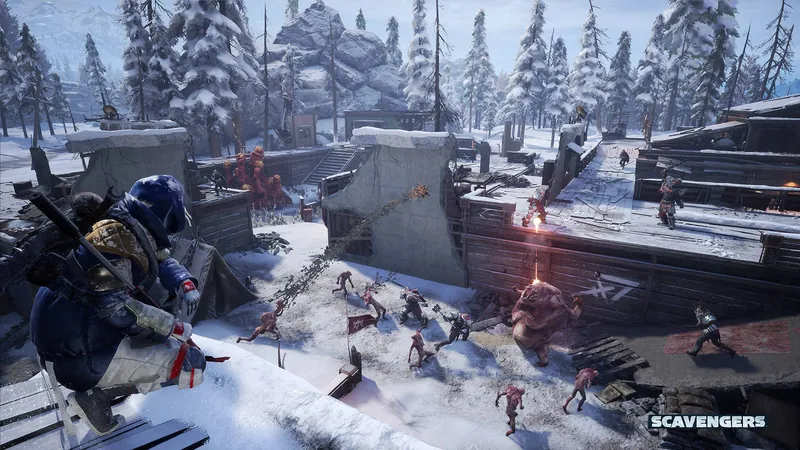
Key principles unlock fast feedback
This is as true for the largest studios as the smallest ones — although for different reasons. Indies and smaller operations can struggle to implement key principles like continuous improvement and learning, working in small increments, sustainable development and fast iteration, purely because it’s hard to invest in them — from a time or a financial standpoint. Larger studios tend to have the resources, but in my experience can be prone to blind spots.
Partnership potentially solves for all these things. Smaller game developers can offload shaping and generating the various processes, by bringing in a team to work with them, rather than building one of their own. Larger studios can draw on the resources of those with great expertise in this particular area, in order to help them identify opportunities and gain fresh perspectives.
In all cases, this is about external and internal resources working in concert, to help a studio move at speed, gain faster feedback and improve games more rapidly.
Transform quality through pipeline optimisation
As part of the Improbable Multiplayer Services (IMS) team, I recently worked with Midwinter Entertainment, in an engagement that focused on playtesting to speed up iteration. Integrating changes into Scavengers was slower than Midwinter Entertainment wanted and was hindering fast feedback. Together, we worked on a solution that significantly sped things up, an element of which minimised the validation process for builds from six hours to just two.
“[Our solution] minimised the validation process for builds from six hours to just two.”
- Jafar Soltani, Senior Engineering Manager & Head of Reliability Engineering, Improbable
This kind of optimisation can prove transformative. Committed changes can be playtested more rapidly. Blockers can be dealt with by more iterations on the same day. By contrast, if you’re waiting six hours for builds, it’s unlikely you’ll be able to playtest more than once in a single day — if you even get the chance to test the same day at all.
With more frequent playtests, you gain value from people working on the game, through seeing the effect their changes have on it, and others in the studio chipping in feedback as well. Another benefit is improved quality, because regular playtests result in you finding problems sooner rather than later — and you can then respond to them more efficiently and effectively.
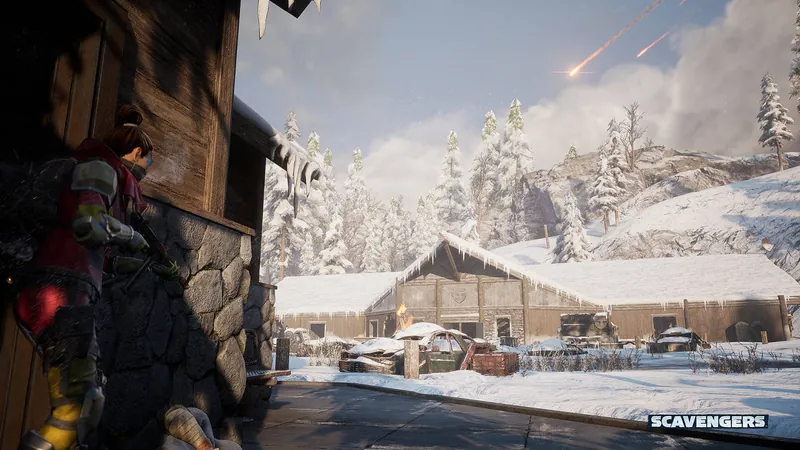
Use tech and people to best effect
With Scavengers now being in Early Access with live players, speed is even more of the essence, because when faced with a blocking issue, it’s no longer just about hampering company-wide playtests. It’s vital to be able to deal with bugs quickly, to mitigate negative player impact. The processes set up and optimised during the engagement now enable Midwinter Entertainment to release those patches in a matter of hours, instead of days or even weeks.
We also worked with Midwinter Entertainment to do something distinctive, integrating simulated players into the pipeline and game testing. Essentially, they are a framework that allows the game to run with AI/bots, in order to test performance and also stability when performing certain actions.
Scavengers needs 60 players for a full session and end-to-end testing and so the integration of simulated players allowed Midwinter Entertainment to further scale up testing in a big way. We could run tests with 50 simulated players in a session alongside ten humans and get usable and valuable feedback. By offloading to computers what they can do faster, better, more reliably and repeatedly, it’s possible to free up people from repetitive work. So not only does this result in faster, regular, reliable playtests, but also more developers are able to engage in doing things unique to their skillsets.
Work together to change your studio culture
The nature of this kind of engagement is about bringing expertise from an external team to address problems a studio is having — and to then solve them together. Bringing in outsider consultants that come in, tell people what to do — and then disappear — won’t work. This is why we at IMS operate as an enablement team. We keep the customer heavily involved, ideally training studios to understand problems, enabling staff to address and solve similar concerns in future themselves.
“This kind of engagement is about bringing expertise from an external team to address problems a studio is having — and then solve them together.”
- Jafar Soltani, Senior Engineering Manager & Head of Reliability Engineering, Improbable
It’s also important to know that tools alone are not enough. There are plenty of tools and techniques at your disposal as you move towards faster iteration: trunk-based development; feature flags; working in small increments; pipeline optimisation; parallelisation. But fundamentally, this is about principles — creating a cultural shift that enables continuous improvement.
Companies attempt and fail to achieve their goals with tools-first approaches or when attempting to copy someone else’s success without fully understanding the uniqueness of individual studios, the benefits of specific tools and processes, and why they are best used. What’s important is adopting the right principles.
How can you iterate at speed and get fast feedback? How can you work in small increments and reduce the accumulation of technical debt? How can you continuously improve? Those are the key principles you must strive for. Learn more here.
Related Tutorials

Game videos from the Game Trailer Challenge: overview and breakdown with Alconost
We introduce personal top ten videos from the Game Trailer Challenge, analyze what made each particular video awesome, …
 Alconost
Finland for Game Devs: A Little Country with Big Possibilities
Finland has become a focal point for leading gamedev companies from around the world: Ubisoft, Electronic Arts, Epic Ga…
Alconost

Join the Games Industry Roundtable and Make Your Mark on the Technology of the Future
Professional game developers can sign up today for industry insights, discussions and more.
GameDev.net

Interview: How indie devs from a small Russian city make games for Google Play and social networks
Duck Rockets, an indie studio from Russia, shared their insights on the following: * why small local markets are more …
Alconost

RoKabium Games on Building a Game from the Ground Up
Interview with RoKabium Games on their success as a two-person indie developer studio.
 Steven Large

Interview: Game Design Careers with Byron Atkinson-Jones
In this interview, Byron discusses the best ways for young video game designers to get into the games industry.
Iain Twizzworks
Discussion
More from GameDev.net
New World Interactive: How IMS Game Server Operations Help Enable Greater Cost Management
Discover how New World Interactive migrated to Improbable Multiplayer Services and cut their monthly recurring server o…
GameDev.net

How to update your game without impacting player experience (or revenue)
How much is a minute worth? What about thirty? When it comes to free-to-play titles that rely on micro-transactions and…
GameDev.net
6 must-knows about effective infrastructure management from the experts
No matter how well-designed your game, player experience will suffer if you don’t have the right compute. First off, yo…
GameDev.net
Discussion