
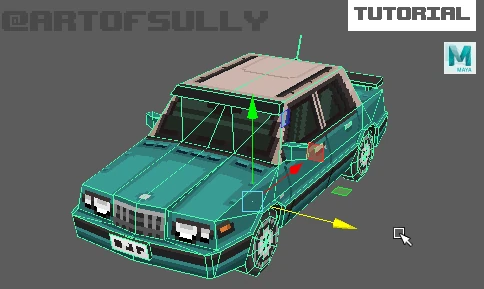
Reverse-Normal 3d Outline Tutorial
A simple trick for getting a crisp outline on a 3d mesh.

- Duplicate your mesh.
- Apply flat black material for the outline.
- Select your duplicated model and reverse its Normal direction. 'Face normals' are the direction a face is pointing/rendering.
- Next, we turn on backface culling. 'Backfaces' are the sides of faces that are pointing away from the normal direction.
- Change your move manipulator to move based on normal direction. Then scale the mesh outwards.
You can use a shader to do this but you will often get issues at corners where the faces diverge.
Be mindful of your poly count since you're basically doubling it. If you're working super low-poly though it's all good!
Note: This tutorial was originally published on the author's website, and is reproduced here with kind permission. Check out Brendan's ArtStation and Twitter accounts for portfolio and other tutorials.
Recommended resources
3D Art

3D Environment Design with Blender 5
Amazon · Book
Based on Blender 5, this updated second edition simplifies the complexities by guiding you through clear, practical workflows to overcome those challenges. You’ll start by addressing common modeling and proportion mistakes, then move on to realistic texturing and unwrapping to create stunning scenes based on actual references.
GameDev.net may earn a commission if you purchase through these links. This helps fund the site at no extra cost to you.

Low Poly 3D Modeling in Blender
Amazon · Book
Step into the world of low poly 3D art with Low Poly 3D Modeling in Blender—your entry point into Blender and mastering the fundamentals of 3D art. This beginner-friendly guide ensures that you’re fully prepared for the creative adventure that follows. Through a step-by-step learning process starting with the principles of low poly art, this book gradually immerses you in the intricacies of modeling. As you progress, you’ll gain hands-on experience creating diverse projects ranging from designing a simple 3D crate to rendering complete low poly scenes. The book covers a wide spectrum of topics as you navigate Blender's interface, mastering essential modeling tools and exploring both basic and advanced modeling techniques. Advancing to the final chapters, you’ll find ways to breathe life into your models with material creation and gain practical insights into modeling a variety of low poly objects. From end-to-end scene construction to configuring Blender for rendering high-quality images, you’ll be equipped with the foundational skills to propel your career in 3D modeling and explore the boundless creative possibilities that Blender offers. By the end of this book, you'll have a solid understanding of Blender, 3D modeling, low poly methodologies, material design, 3D rendering techniques, and the broader world of 3D art.
GameDev.net may earn a commission if you purchase through these links. This helps fund the site at no extra cost to you.
Related Tutorials
Why Animation and Cinematics Matter in Horror Games
Learn how animation and cinematics can become part of gameplay in horror games by teaching mechanics, creating vulnerab…
 huseyin_onur
Designing Horror Games Inspired by Real-Life Experiences
Learn how real-life experiences can inspire more authentic horror stories, stronger emotional connections, and memorabl…
huseyin_onur
Balancing Game Development and Creative Direction in Indie Production
A practical look at how indie developers can balance creative direction with hands-on game development. This article co…
huseyin_onur
My Unreal Engine Development Process: From Core Idea to Playable Build
A practical overview of my Unreal Engine development process, covering how I move from a core game idea to a playable b…
huseyin_onur

Introducing LaneGraph: The Ultimate Road Network Solution for Unity
Discover the power of LaneGraph, a lightweight and flexible lane-based navigation system for Unity. LaneGraph makes it…
Retargeting Mixamo Characters with Root Motion In Unreal Engine 5.4.
I have always found Retargeting Mixamo Characters To have Root Motion is a serious lengthy Tast, Recently I stumbled up…
Discussion
More from Brendan Sullivan
Color Palettes
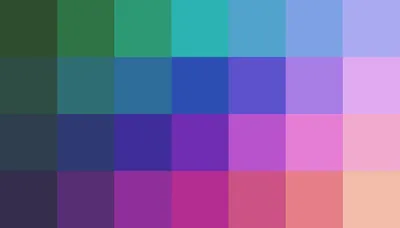
Creating a custom color palette can be a very satisfying and powerful way to establish your own unique look. I'll guide…
Composition 101: Balance
What are the principles of Balance in Composition? Otto Ostera discusses the 3 elements of balance: shape, direction, a…
Planescape CRPG Last Rites Product Review Pack
Product Review Pack / Vision Statement of Planescape Last Rites, an isometric role-playing game that takes place in TSR…
Discussion