

Hi everyone,
I’ve been developing a game concept called KAIVERN. At this stage it is not a prototype and I am not presenting it as a finished game. It is a fairly extensive pre-production design.

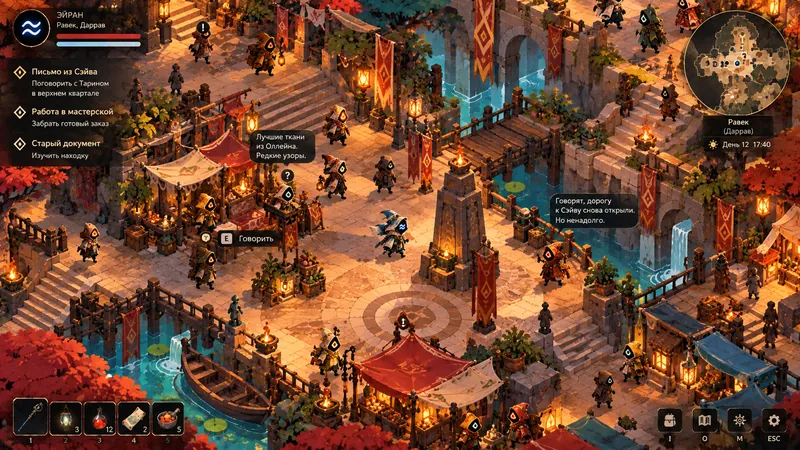
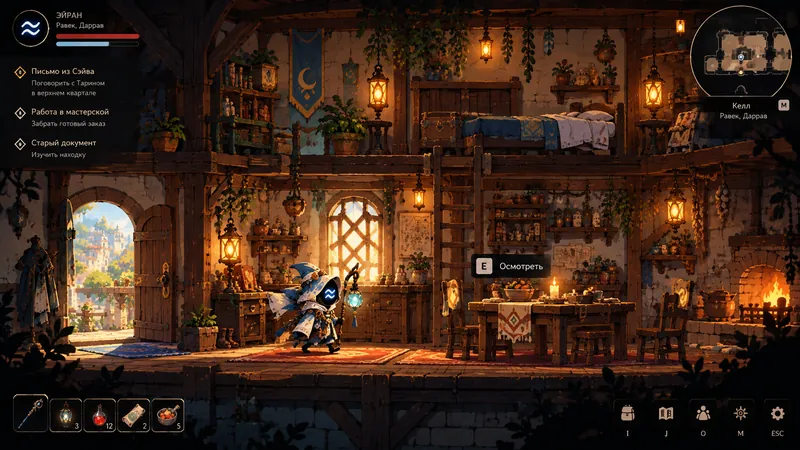
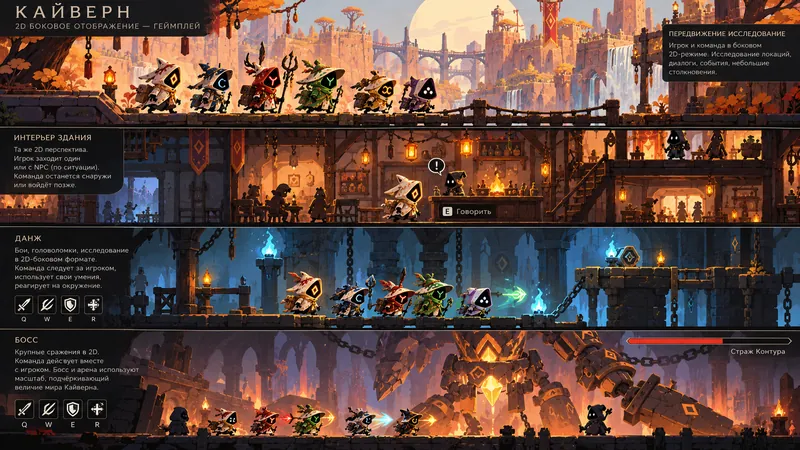
I have developed the world structure and history, lore, visual direction, states and cultures, core gameplay systems, progression, combat, economy, trade, physical item provenance, NPCs and relationships, exploration, multiplayer spaces, and an architectural concept for how these systems could coexist inside one continuously changing world.
The central idea of KAIVERN is:
Single History · Personal Presence · Shared Consequences
KAIVERN is conceived as a persistent RPG / world simulation with one logical World State and one historical timeline.
However, the ordinary open world is deliberately not an MMO space filled with other player characters. Each player experiences their life primarily among NPCs, while their actions may still affect the same authoritative world that every other player interacts with.
Players meet directly only in deliberately designed multiplayer spaces - PvP, selected cooperative expeditions, encounters and other specific activities. The economy, player-to-player trade, world processes, unique objects, discoveries and significant consequences remain shared.
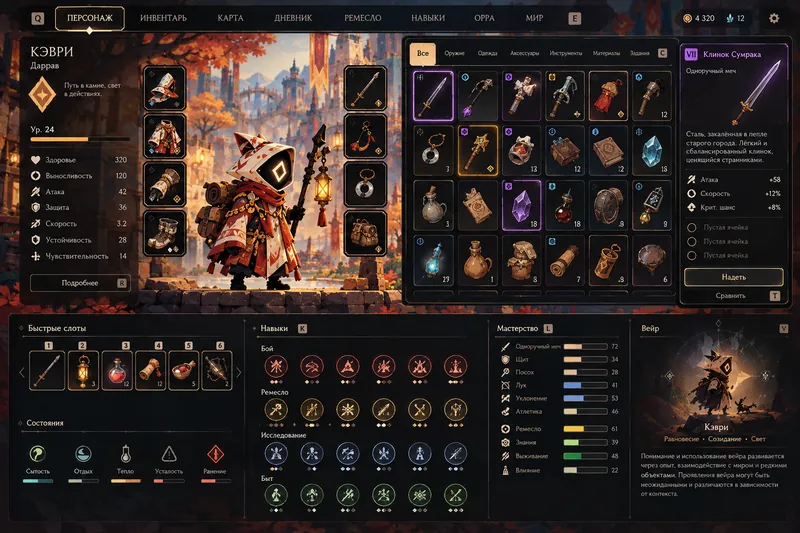
There is no traditional level → XP → gear score progression model. Character development is based on mastery, physical condition, knowledge, relationships, possessions, tools and access to new possibilities. NPCs have their own biographies, memories, knowledge, property, obligations and goals. Items are intended to exist as concrete physical objects with provenance and history rather than infinitely reproduced loot entries.
AI is not intended to be the source of truth or an infinite quest generator. It would operate as a bounded decision-making layer inside a much stricter simulation architecture. Authoritative world state, history, economy, ownership and causally significant events would remain server-controlled.
The concept is now documented in a Public Game Design Bible. I intentionally keep the central narrative answers and some internal architecture private, but the public document contains enough information to evaluate the overall design.
At this point I am not primarily looking for praise for the idea. I am looking for professional criticism of whether the architecture can realistically be built.
I would particularly appreciate feedback from people with experience in backend/networking, persistent worlds, simulation systems, game AI and production:
Do you see any fundamental technical contradictions in the personal presence + shared authoritative World State model?
How realistic is a layered simulation in which millions of inhabitants do not mean millions of continuously running AI agents, but instead exist at different simulation resolutions and are concretized when causal significance requires it?
Which parts would you consider the highest technical risks: Shared Causality, NPC continuity, economy, persistent objects, knowledge simulation, the AI layer, or something else?
What is the smallest vertical slice that could genuinely prove or disprove this architecture?
What kind of team would be required to build that vertical slice, and which technical roles would you hire first?
What range of development time and budget would you consider realistic for an initial technical prototype and, later, a production-quality vertical slice?
Which systems would you simplify or postpone without destroying the central premise of KAIVERN?
I understand that a detailed design document and a functioning game are two very different things. That is exactly why I am currently more interested in identifying what must be proven through prototyping than in claiming that the entire concept has already been technically validated.
Critical technical and game-design feedback is very welcome. If the project is professionally interesting to anyone, I am also open to talking with developers who might eventually be interested in participating in an initial prototype.
Thank you for taking the time to read it.