Original Post

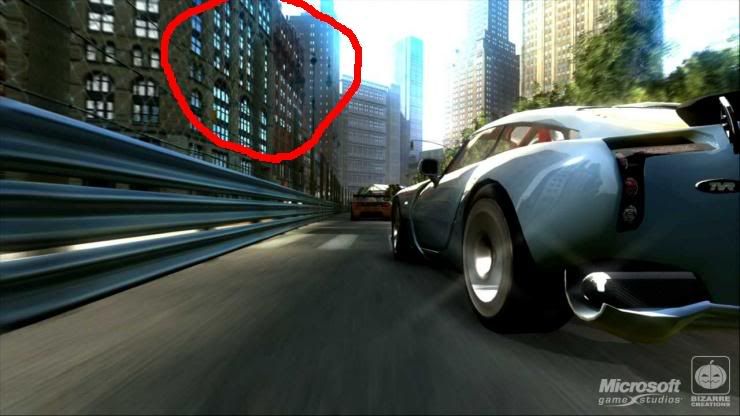
Hi, For those familiar with real-time HDRI work, a common processing step is to blur/filter the HDR values and then add them back to the scene - giving bloom/star (etc..) filters.. Whilst the actual effects might not be physically accurate, they do seem to at least be close to the physical effects. My understanding, which might be the problem here, is that in real photography those effects are a product of the lens (and its optical properties) used to take the image(s).. Which, surely, should mean that all incoming light is subject to the same scattering/filtering effect. Either it's all just a general blur/bloom or it's all going to be a star-filter. ?? However, I saw a link for some PGR3 screenshots (XB360), one of which is the following:  (click to enlarge)
(click to enlarge)