

I am currently spending my time in coding something unrelated to 3D games. And i don't enjoy it. Although, it has infinite applications and thousands of job offers online. When I finish my project, i expect to find job easily using it as a demo. But I don't enjoy codding it.
I would very enjoy to program for realistic 3D. It would be what I would enjoy the most. I wish to download 3D models and try to render them realistically in real time.
But I am afraid to do that, because game companies who aim for realism are much fewer than the companies who look for what I currently code.
I am also not sure, how interested in realism those few game companies are.
An hypothetical case:
I manage to create something pretty realistic that can run in real time. Who cares?! What current companies offer is realistic enough to sell well, and they DO sell well. I talk from my experience when i say that often companies prefer to keep selling their 9 of 10 products, rather than risking to improve their products to 10 of 10. If something sells good enough, why risk for a 10 of 10?! It is easier to marketing-out the last 1 of that 10 of 10, than invest effort in it.
Unless i can code something to look literally real life like, that has an indisputable value. Something i don't know if i can do until i try. That's why i formulated my question this way- invest time.
I very wish to code for 3D games, but I doubt it is worth. Is it? Before 30 one does what he wants, after 30 one does what he has to. I'm not in the "i'll become an astronaut" period of my life.
Is it worth to invest time in programming realistic 3D for games?

1 hour ago, NikiTo said:I manage to create something pretty realistic that can run in real time. Who cares?! What current companies offer is realistic enough to sell well, and they DO sell well. I talk from my experience when i say that often companies prefer to keep selling their 9 of 10 products, rather than risking to improve their products to 10 of 10. If something sells good enough, why risk for a 10 of 10?! It is easier to marketing-out the last 1 of that 10 of 10, than invest effort in it.
Looking back, there always was effort to improve realism. Games that achieved noticeable progress towards this often sold well just because of that. I assume this trend continues until games look like reality, but it becomes harder and harder to achieve progress, which is just natural.
Because progress is slower now than 20 years ago, we may think there actually is less interest in more realistic graphics. But this must be wrong. Think of one company releasing a game that looks real. All other companies games would look outdated - nobody wants this. Also realistic graphics likely means less work for artists so reducing costs (one main argument for upcoming raytracing 'revolution').
But that's just my personal opinion as an industry outsider. I second your question... 
Personally i would advise you to focus on finishing what you're currently working on. Likely developing graphics tech means many years of work and an extremely high risk somebody comes up with something better before you. Many people already work in this field. And i think you can not plan inventions at all - they just happen if you're lucky, and only after that you can think of making money from it (assuming you don't have a concrete idea yet). This means doing it just for fun for some time, even if you're >30
I just had an idea this night. A way to improve 3D graphics. So far, while i am counting registers on hand by the boring project, i think about that 3D rendering idea, and so far it sounds plausible.
I can not tell nothing sure until i try to code it. It just looks good for now.
It is bad to switch projects. I agree at 1000%.
I could fool myself to believe that the time i spent for the current project was worthy, because "it let me trough practice know much better the 3D API".
Another problem is that i lose the focus. If i let the current project apart for some time, i will forget it. Later, when I am back I will need two days to fully remember again what I was doing.
The good thing is that if i code for 3D i would be more productive, because i enjoy it. Now I am coding only 2h a day, the rest of the day I am procrastinating. Last time i coded for 3D i was spending sleepless nights doing what i like.
I guess, i could finish to compile the shader i am currently writing, and let it there. Then try to code for 3D.
What you say about the competence sounds encouraging. It makes sense to show on an interview your real-life-like demo and if they try to fool you around you to tell them - "i can sell this to the competence, and they will make your game look like 10 years older". Just talking.... Because plans are made to fail....
13 minutes ago, NikiTo said:I just had an idea this night.
Well then, of course implement it in any case!
Trying out ideas is fast, just making a product of it lasts long.
21 minutes ago, NikiTo said:Last time i coded for 3D i was spending sleepless nights doing what i like.
You know i do exactly what you consider, and i can tell you: You won't enjoy this either when it comes tho the details which take 95% of time. haha 

3 hours ago, NikiTo said:I would very enjoy to program for realistic 3D. It would be what I would enjoy the most.
That makes it worth your while. You don't have to do it from a possibly unrealistic expectation of obtaining lifelong employment doing it. Doing it once would give you a great portfolio piece, at the very least.
3 hours ago, JoeJ said:Trying out ideas is fast, just making a product of it lasts long.
If my idea looks nice, i will just make a character walking around with the keyboard directions and free camera mode. Just enough for a demo.
3 hours ago, JoeJ said:You won't enjoy this either when it comes tho the details which take 95% of time. haha
That's why i will use models of hot chicks. Downloaded few already to test the ambient occlusion under the skirts.
Will take its time to convert the model formats...
1 hour ago, Tom Sloper said:Doing it once would give you a great portfolio piece, at the very least.
30 minutes ago, NikiTo said:i will use models of hot chicks. Downloaded few already to test the ambient occlusion under the skirts.
Come on. You cannot use that as a portfolio piece for a game industry job. Unless you're going to apply only to jobs making porno games.
18 minutes ago, Tom Sloper said:Come on. You cannot use that as a portfolio piece for a game industry job
I will use it only during the development.
I downloaded Nier and Aloy to work on. I have Ellie from Last Of Us somewhere too. Nobody naked.
Don't tell me you never peek under the skirts of the female models you download When i manage to unpack the .mdl file of Nier, this will be the first thing I do.
Aloy is a good challenge as she has lot of details.
(knowing my sense of humor....i can imagine myself defending my app on an interview using NSFV models XDDD. I dont think it would be a problem if we are only bros at the interview)
38 minutes ago, NikiTo said:knowing my sense of humor...
You should assume that absolutely nobody is interested in this kind of...
guess what i mean. (well meant advise!)
In Denmark it is required to talk about your personality and character in the resume. They want to know about the personality of the person they will have to work with. A sense of humor there is a plus.
In Germany only the professional side of an applicant matters, nobody cares about the personality.
In other places this could vary even more. Internet is a meeting point of people from many cultures and mentalities.
Anyway, this is a huge deviation from the original topic. I am halting now...

All the "realistic" graphics engines are developed by large teams of developers. If you want to work on the Unreal, Unity, Frostbite, CryEngine, Source engine, or similar engines, you should study the available technology, and learn how it works, and then learn how to extend it in some interesting way. You can then use that as a demo/calling card for applying to work on those teams. And, believe me, good graphics programmers are REALLY HARD to find, so if you're good, you'll very likely get a job.
The Unreal Engine requires a simple (free) sign-up, and then you can download and build it yourself on your machine, with full source code. This is a great way of learning how a modern game engine works (with animated meshes, materials, lights, shadows, and all the rest.) If you then want to try something else, all the art path bits (how to import textures, how to animate meshes, and so forth) is already there, and you only need to replace the bits you think you can do differently.

It is definitely worth it. There is so much you can learn from it, not just specifically for games, but for programming and 3D graphics in general.
Understanding the complexities of how a realistic graphics engine is set up, and all the mathematics, libraries, theories, design patterns and algorithms used to make it work, really speaks volumes. If you can master that, there's no telling what else you could accomplish.
It's basically the rocket science of the Computer Science trade.
..Okay maybe I'm overreacting a bit but it really is very useful.

IMO, stylized games have a longer lifespan specifically because the audience can tell it wasn't meant to be realistic. As long as the art is beautiful, the game is fun, the central idea is cohesive and strong, and the mechanics are tight, you have a classic as long as you market it well. This is what Ive taken away from a lot of GDC conferences and talking to indie devs.
A tall order on its own, no?
37 minutes ago, EmmersionStudios said:IMO, stylized games have a longer lifespan specifically because the audience can tell it wasn't meant to be realistic.
Style has nothing to do with realism. Even if you would have total realism you could still apply any art style you want, with the additional options to utilize the beauty of multi-bounce diffuse interreflection, for example. But you can still do low-poly or cartoonish graphics.
So my point is that realism only adds options and variation - it does not remove them. What you say somehow sounds like 'the technical limitations of realtime graphics help me to find a unique art style by accident'. But this can't be true if you think of it, because others have the same limitations, and so the same 'ideas' coming from it. With total realism the artist has much less limitations to deal with, and he can focus more on creating just art. Win-win.
(The same would apply to things like gameplay mechanics if we would talk about better physics, but lets focus on just graphics.)
Would i convince you with this kind of argumentation? (I'm curious what you think because working on photorealism myself.)
VR games/experiences are the future. And i believe nobody will use VR without 3D and the more realistic the VR is, the better.
I pull from the argument of the VR, because i could say that having the assets and the design of the game being known before hand, one could program a 2D game in few weeks, or even a single week using simple HTML5 and JS. But realistic games take years to make.
I could have said that, but this is about preferences.
So, i use the VR argument here, because i think VR(the future) is indisputably demanding for photorealism.
(modern 2D games are much more cooler when they use enjoyable physics, so even in 2D games, we experience an aim for realism(physics realism))
(in my own opinion the worse is to make a bad looking 3D game with poor graphics. If I were being given to choice to make a bad looking 3D game and a 2D game, I would choose the 2D game. 3D plus poor realism is a very bad combination)

On 8/2/2018 at 7:23 PM, NikiTo said:if we are only bros at the interview
So, what if the interviewer is a woman?
10 hours ago, JoeJ said:Style has nothing to do with realism. Even if you would have total realism you could still apply any art style you want, with the additional options to utilize the beauty of multi-bounce diffuse interreflection, for example. But you can still do low-poly or cartoonish graphics.
So my point is that realism only adds options and variation - it does not remove them. What you say somehow sounds like 'the technical limitations of realtime graphics help me to find a unique art style by accident'. But this can't be true if you think of it, because others have the same limitations, and so the same 'ideas' coming from it. With total realism the artist has much less limitations to deal with, and he can focus more on creating just art. Win-win.
(The same would apply to things like gameplay mechanics if we would talk about better physics, but lets focus on just graphics.)
Would i convince you with this kind of argumentation? (I'm curious what you think because working on photorealism myself.)
I understand what you're saying. However, technology improves with time and usually makes "photorealism" outdated. Just look at Skyrim 2011 or Tomb Raider 2013. At the time, gamers were screaming about how wonderful and realistic the graphics were, but it didn't take long for the gaming community to turn on those games as blocky looking and out of date.
The problem is you're not competing with the graphics of today, but the graphics of tomorrow.
2 minutes ago, EmmersionStudios said:Just look at Skyrim 2011 or Tomb Raider 2013. At the time, gamers were screaming about how wonderful and realistic the graphics were, but it didn't take long for the gaming community to turn on those games as blocky looking and out of date.
Agree, but we are not even close to photorealism. PBR or photogrametry does not help much here - actually it just increases the gap between 'that trailer / screenshot looks awesome almost real!' and 'meh - playing the game often everything looks off'
I see what you mean here with a true classic may manage to keep looking fine even after a decade, by dealing well with actual limitations. Thanks.
realism only adds options and variation - it does not remove them
All the Borderlands games look great, and none of them were made to look "realistic."
Perhaps you meant "the ABILITY to do realism only adds options ..." because "trying to look realistic" absolutely removes options that don't try to look realistic.
1 hour ago, hplus0603 said:All the Borderlands games look great, and none of them were made to look "realistic."
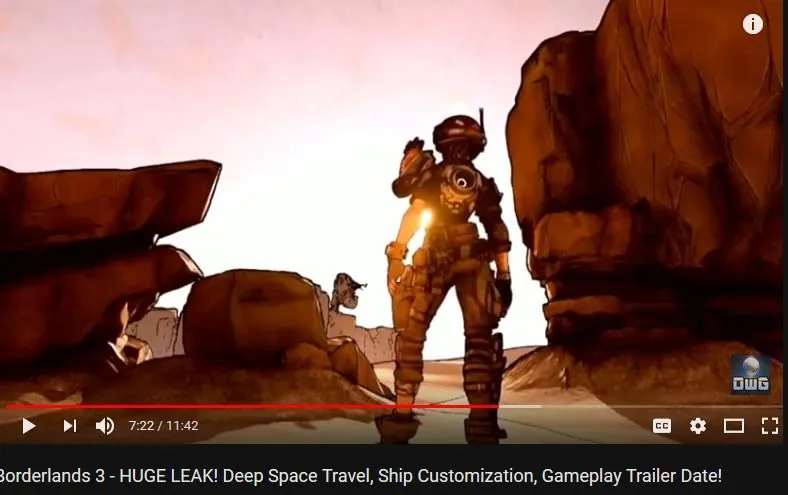
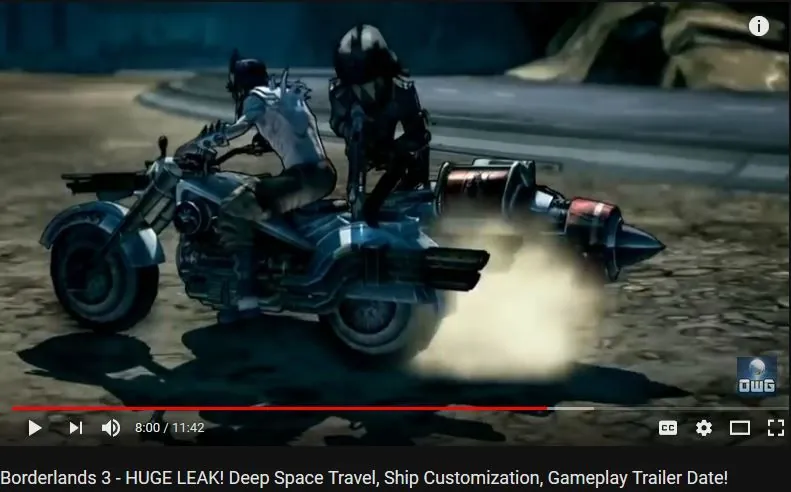
I think it was made as realistic as any many other games. It was just added cartoonish style on top of the realism. Just like Observer is a 3D realistic game with lot of style added on top. In Observer we have a 2D pixel game inside the realistic 3D game. It would be weird to see the vice versa.
We should define visual realism as the aim for realism that produces something playable on 30+ FPS.
A lot of Peter Panning here too, it is the demo, the real game should look worse: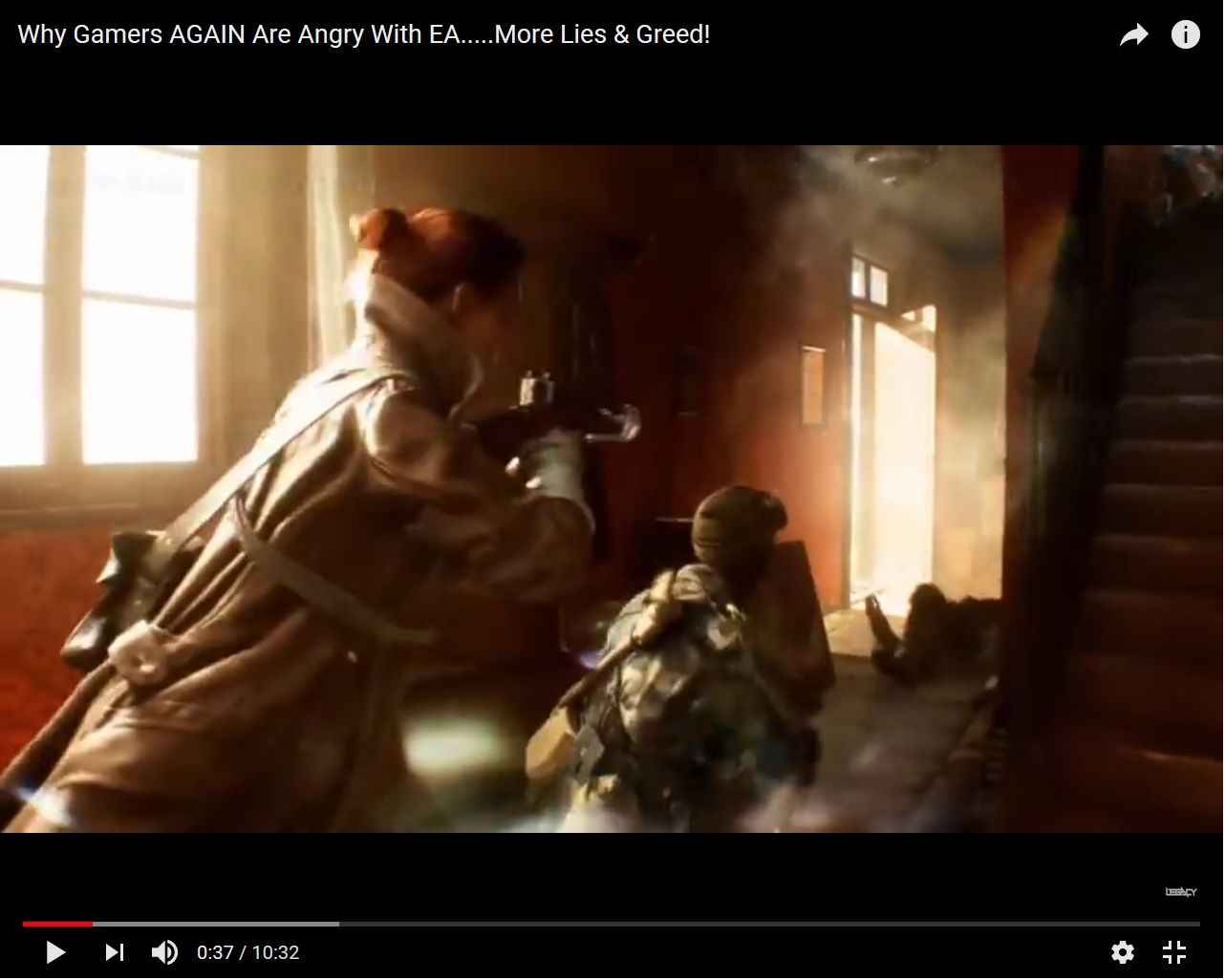
Crysis and Horizon Zero Dawn became legends in big part because of the aim for photorealism.
A 2D game still can make a big impact. Like Doki Doki Literature Club.
2 hours ago, hplus0603 said:because "trying to look realistic" absolutely removes options that don't try to look realistic.
Definitively the case of Doki Doki Literature Club. If it was realistic, it would lose its whole fanbase.
But if a game lacks realism, it should add a value from somewhere in order to compensate. Just like South Park series that has no realism at all, but it compensates it with the screenplay.
Overwatch is like Borderland. It doesn't pretend to be accurate with reality. The hairs in Overwarch are deliberately made to look unreal, but D.Va is still the queen of SFM movies ( ͡° ͜ʖ ͡°).
Topic Locked
This topic has been locked by a moderator. New replies are not allowed.