GameDev.net gamedev.net
Official Announcement

This is an official announcement from LunarG. Information comes directly from the source.

PRO Tired of ads? Read GameDev.net ad-free and help keep the community independent with GameDev Pro — $3/month.

LunarG
LunarG Official
· 2 weeks, 2 days ago • Randi Rost

The State of Vulkan on Apple – Oct. 2026

Briefing

LunarG’s October 2026 update lays out the current state of Vulkan on Apple platforms and why it still matters for cross-platform engines. The big change is that developers can now ship with either MoltenVK or KosmicKrisp from the Vulkan SDK, with the loader, validation layers, and Universal Binary support all packaged for Apple desktop and iOS workflows.

KosmicKrisp is the newer option: it is built on Mesa, layered over Metal 4, and is described as fully conformant with Vulkan. The tradeoff is hardware and OS coverage — it requires Apple Silicon and Metal 4, so Intel Macs are out on current macOS releases. MoltenVK remains the safer compatibility path, especially for iOS, where it is still the supported option for shipping today.

For engine and tools teams, the practical implication is that Apple support no longer has to mean a separate rendering backend. Vulkan can be selected dynamically at runtime based on OS version or hardware, which simplifies packaging and lets teams keep one low-level API strategy across Windows, Linux, Android, and Apple devices. That said, iOS support for KosmicKrisp is still experimental and not enabled in the Mesa tree for shipping use.

The broader message is straightforward: if your studio wants to keep a Vulkan-first renderer while reaching Apple users, the ecosystem is now more viable than it was a few years ago. The remaining decision is mostly about compatibility versus conformance, and whether your audience justifies the extra Apple-specific validation work.

“There cannot be a native Vulkan driver for Apple platforms, desktop or mobile.”

— LunarG · Explains why Vulkan must be layered over Metal on Apple
Original source
Read on LunarG
At a glance
what
LunarG updated its guidance on Vulkan support across Apple platforms, including macOS and iOS.
who
LunarG, with KosmicKrisp sponsored by Google and MoltenVK as the established option.
when
The update is dated October 2026; macOS 27 drops Intel support.
impact
Studios can ship Vulkan-based Apple builds via Metal-backed layers and choose between compatibility and conformance.
Signal Mixed

Better Vulkan options, but Apple constraints remain

Discuss

Follow Vulkan updates

See relevant stories in your personalized news feed.
Sign in to follow

Continue on GameDev.net

Useful next steps related to this story.

Game development news without the noise

One useful weekly briefing. No daily flood.

Sending your confirmation email…

Discussion

Loading comments...

Recommended resources

Vulkan: recommended books and gear

See full guide
Vulkan Programming Bible: Unlocking the Power of Vulkan for Developers cover

Vulkan Programming Bible: Unlocking the Power of Vulkan for Developers

Amazon · Book

A Vulkan-focused guide aimed at developers building graphics applications, games, or simulations. Based on the description, it covers GPU control, memory management, and performance tuning for people moving beyond older graphics APIs.

As an Amazon Associate I earn from qualifying purchases.

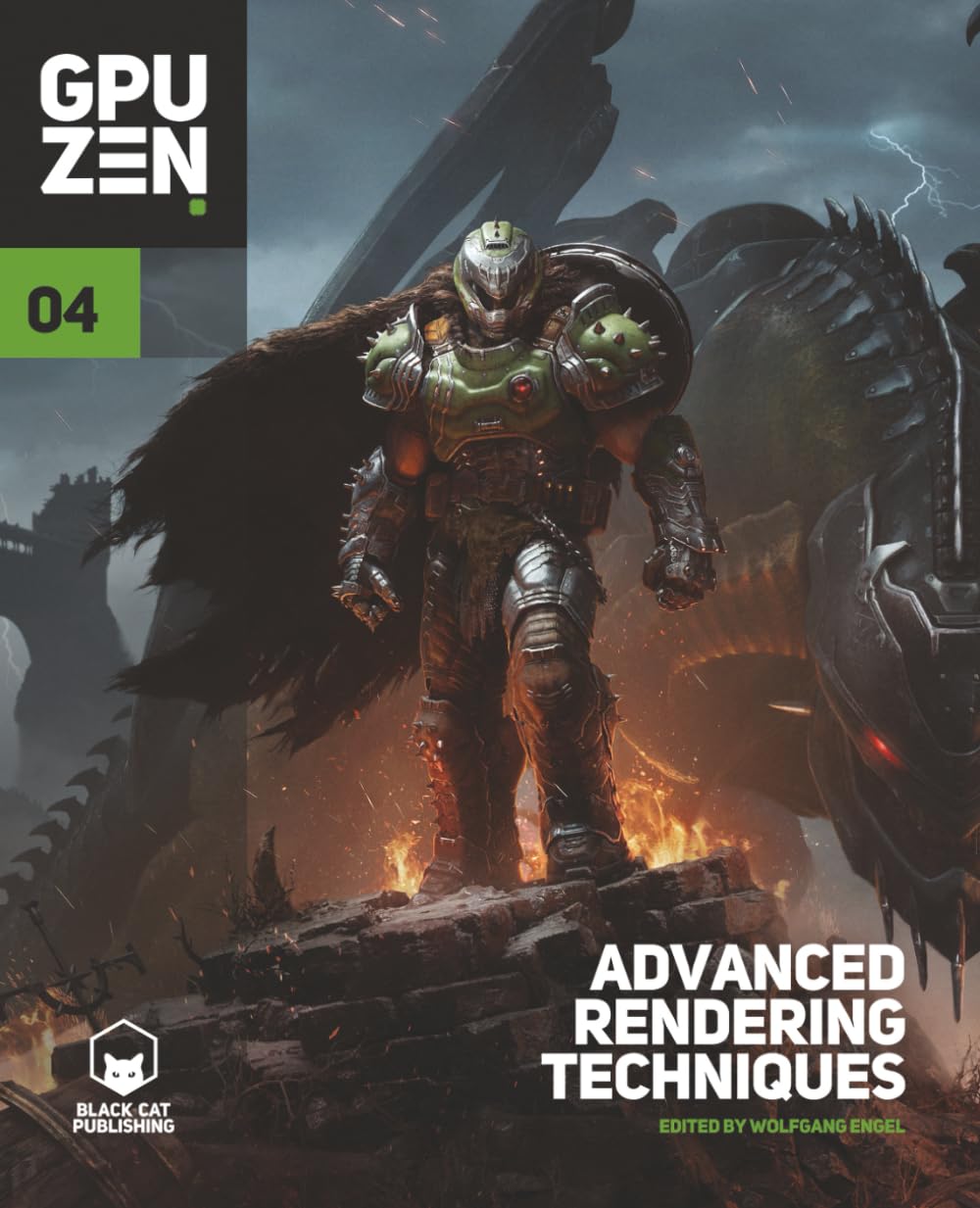
GPU Zen 4: Advanced Rendering Techniques cover
Editor pick

GPU Zen 4: Advanced Rendering Techniques

Amazon · Book

Exploring recent developments in the rapidly evolving field of game real-time rendering, GPU Zen assembles a high-quality collection of cutting-edge contributions for programming the GPU.

As an Amazon Associate I earn from qualifying purchases.

Vulkan 3D Graphics Rendering Cookbook cover
Editor pick

Vulkan 3D Graphics Rendering Cookbook

Amazon · Book

Written by experts with decades of rendering experience, this cookbook equips you with practical, hands-on recipes to master modern 3D graphics development by using bindless Vulkan. Focusing on Vulkan 1.3, this second edition starts by setting up your development environment, and quickly transitions to building a robust 3D rendering framework using self-contained recipes. Each recipe helps you incrementally enhance your codebase, integrating a variety of 3D rendering techniques and algorithms into a cohesive project. You’ll get to grips with core techniques, such as glTF 2.0 physically based rendering, image-based lighting, and GPU-driven rendering. The chapters help you grasp advanced topics, including glTF animations, screen-space rendering techniques, and optimization strategies. You’ll also learn how to use glTF 2.0 advanced PBR extensions and handle complex geometry data, ensuring your rendering engine is both powerful and performant. These new additions will enable you to create dynamic and realistic 3D graphics environments, fully utilizing Vulkan’s capabilities. By the end of this 3D rendering book, you’ll have gained an improved understanding of best practices used in modern graphic APIs and be able to create fast and versatile 3D rendering frameworks.

As an Amazon Associate I earn from qualifying purchases.

NVIDIA GeForce RTX 4090

Amazon · Hardware

The top of NVIDIA's consumer line, with a large frame buffer that pays off when lightbaking, rendering cinematics, iterating on heavy Nanite and Lumen scenes, or running local AI models. Overkill for most projects; justified for graphics-heavy teams and tooling work.

As an Amazon Associate I earn from qualifying purchases.

GameDev.net may earn a commission if you purchase through these links. This helps fund the site at no extra cost to you.