
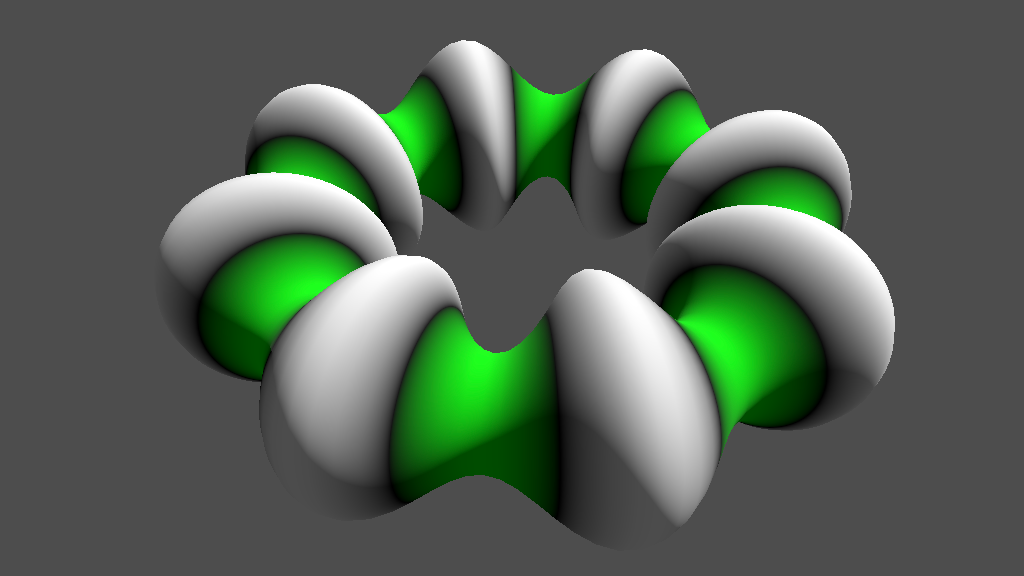
Sine Waves - Procedural GPU Patterns
Procedural patterns on the GPU are attractive because they avoid texture memory and can be parameterized cleanly, but they are not free. A sine-wave pattern is a simple case that still illustrates the core tradeoff: every extra layer of complexity becomes more arithmetic for the shader to execute.
That matters most when the effect is used in a surface shader that is already doing lighting, normal work, and other per-pixel calculations. Unlike a texture lookup, a procedural pattern can’t lean on mipmaps and filtering for aliasing control without additional logic, and proper filtering may require evaluating the pattern multiple times.
There’s also a hardware scheduling angle. Texture fetches can sometimes be hidden behind other GPU work when occupancy is low enough, but purely computational patterns keep the shader cores busy instead of giving the GPU a chance to overlap that latency. In practice, that makes procedural effects a quality-versus-performance decision, not a universal upgrade.
For developers, the takeaway is straightforward: procedural patterns are great when you need flexibility or want to avoid asset dependencies, but they should be budgeted like any other shader feature. The more detailed the pattern and the more crowded the material stack, the more likely a texture-based solution will win on cost.
- what
- Procedural GPU patterns based on sine waves are being used as an example of the cost tradeoff versus texture sampling.
- who
- Relevant to graphics programmers and technical artists building shaders and materials.
- impact
- Complex procedural patterns increase shader math, can require multi-evaluation filtering, and add to already expensive surface shaders.
- context
- Texture sampling benefits from mipmaps, filtering, and the GPU’s ability to overlap fetch latency with other work.
Flexible, but can be costly in real shaders
Follow graphics updates
See relevant stories in your personalized news feed.


Discussion