
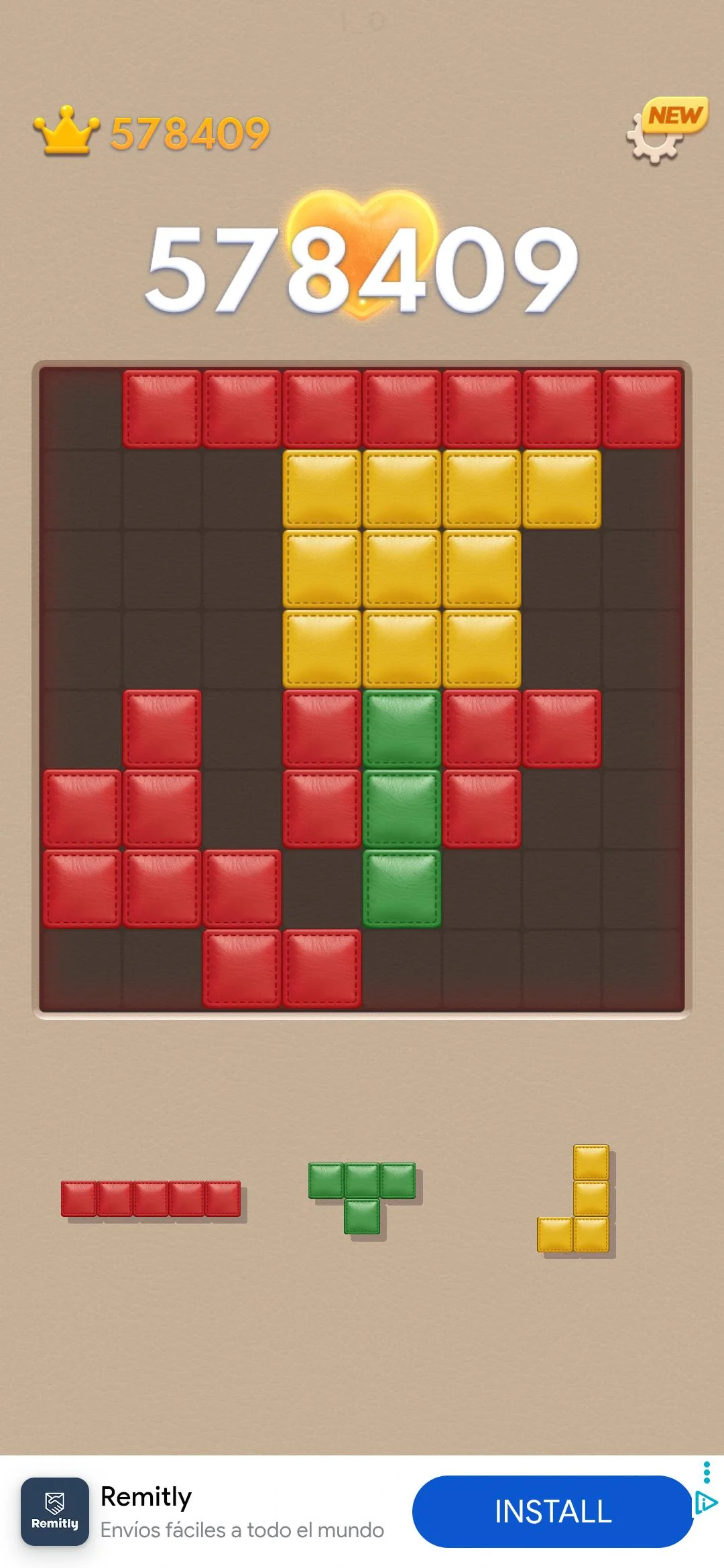

Building a Simple Puzzle Solver: Lessons in Logic and Heuristics
The article walks through building a solver for a grid-based block-matching puzzle, where the goal is to suggest the next best move when a player is stuck. The approach is straightforward: capture the current board state, simulate every legal placement, then score each resulting position with a heuristic. That makes it practical for hint systems and internal playtesting without needing machine learning or heavy search infrastructure.
The main technical lesson is that the heuristic does most of the work. In the example, the solver values open space, line clears, and future flexibility while penalizing awkward holes and dead-end layouts. That’s a familiar pattern for experienced gameplay programmers: the search can be simple, but the scoring function has to reflect what “good play” actually means in your game.
The piece also frames solvers as a design tool, not just a cheat tool. A solver can help balance difficulty, expose broken level layouts, and reveal where players are likely to get stuck. That makes it relevant beyond puzzle games, especially for any system with strategic decision-making where you want to test whether the game’s rules produce the intended player behavior.
The practical implication is that you can often get useful results with a relatively small amount of code if you’re willing to iterate on the heuristic. The author’s advice is basically to build the simplest possible solver, test it against real gameplay, and refine the scoring until it matches your design goals. For teams shipping puzzle or strategy content, that can be a very efficient way to...
“A simple brute-force simulation, combined with a good heuristic, can solve surprisingly complex problems.”
- what
- An article explains how to build a simple puzzle solver using brute-force move simulation and heuristic scoring.
- who
- Written by a community contributor for GameDev.net.
- when
- No specific date or timeline is mentioned.
- impact
- Can be used for hint systems, playtesting, and balancing puzzle difficulty.
Practical, encouraging advice with clear dev value
I've been working on puzzle games for a while, and one problem keeps coming up: how do you help a player when they're stuck? It's a common question in game development. You want players to enjoy your game, not get frustrated and quit.
One solution is to build a solver—a tool that can analyze the game state and suggest the next best move. It sounds complex, but the core idea is simple. You simulate possible moves, evaluate the results, and pick the best one.
In this article, I'll share what I learned while building a solver for a block-matching puzzle game. The lessons I learned aren't just for puzzle games. They apply to any game that involves decision-making and strategy.
The Problem: Finding the Best Move
Imagine a grid-based puzzle game. The player has to place blocks to clear rows and columns. The game ends when there's no space left. The challenge is to make the best possible move in every situation.
Building a solver for this type of game has three main steps:
The Input: You need to know the current state of the game. For a grid-based puzzle, this means the layout of the grid and the pieces the player has to place.
The Simulation: You try every possible move. For each block, you try every possible position on the grid.
The Scoring: You need a way to judge which moves are good and which are bad. This is where the "heuristic" comes in.
Heuristics: Scoring a Board State
A heuristic is a rule of thumb. In a solver, it's a function that gives a score to a board state. The higher the score, the better the position.
For a block puzzle, a good heuristic looks for certain patterns. A simple heuristic might be:
Open Space: The more empty cells, the better.
Line Clears: The more rows and columns you clear, the better.
Future Flexibility: You want to avoid creating isolated holes or positions that are hard to fill.
You can combine these into a single score. The solver then picks the move that produces the board with the highest score.
Challenges and Lessons Learned
Building this solver taught me a lot about game logic and algorithm design. Here are some key lessons I learned.
Simplicity is Powerful: A simple brute-force simulation, combined with a good heuristic, can solve surprisingly complex problems. You don't always need machine learning or advanced algorithms.
Scoring is Everything: The quality of your solver depends almost entirely on your heuristic. If your scoring function doesn't reflect good gameplay, your solver will give bad advice.
Test, Test, Test: The best way to improve your solver is to test it against your own gameplay. If you find a situation where your solver fails, you can analyze why and improve your heuristic.
Why This Matters for Game Design
A solver isn't just for cheating. It's a powerful tool for game design.
Balancing Difficulty: You can use a solver to playtest your levels and make sure they are not too easy or too hard.
Player Assistance: You can use a simplified version of a solver as a hint system. When a player gets stuck, you can offer a gentle nudge.
Understanding Your Game: Building a solver forces you to understand the logic of your game on a deep level. This insight can lead to better design decisions.
Conclusion
Building a puzzle solver is a challenging but rewarding task. It's a great way to learn about algorithm design, game logic, and the importance of a good heuristic. More importantly, it gives you a deeper understanding of what makes your game fun and how to help your players enjoy it.
If you're working on a game with any kind of strategic decision-making, I'd encourage you to try building a simple solver. The lessons you learn will stay with you for your entire development career.
Follow puzzle-games updates
See relevant stories in your personalized news feed.
Discussion